Posted on Leave a comment

The Evolution of the Duffel Bag: From Military Gear to Fashion Statement

A timeline image showing the evolution of duffle bags from military gear to fashion statements. On the left, there is a vintage military duffle bag made of canvas with a drawstring closure. In the center, a mid-century civilian duffle bag is depicted. On the right, a modern designer duffle bag made of leather is shown. The background transitions from sepia tones on the left to vibrant colors on the right, indicating the historical to modern progression.

The duffel bag (or duffle bag), once a staple of military gear, has undergone a fascinating transformation. From its utilitarian roots to its current status as a fashion icon, the duffel bag’s journey reflects broader societal changes and the fluid nature of fashion trends.

Origins in Military Use

The duffel bag traces its origins to the Belgian town of Duffel, where thick, durable woolen cloth was produced as early as the 17th century. These sturdy materials were ideal for creating bags capable of withstanding harsh conditions. However, it wasn’t until World War I and II that the duffel bag became synonymous with military life. Soldiers needed reliable, spacious, easy-to-carry bags to transport their gear, and the duffel bag fits the bill perfectly.

The cylindrical shape, rugged construction, and simple drawstring closure made it indispensable for military personnel. Its design allowed for maximum storage capacity while being easy to pack and unpack, critical for the dynamic needs of soldiers in the field.

Transition to Civilian Life

After World War II, surplus military gear, including duffel bags, flooded the civilian market. Veterans continued to use them in their everyday lives, and their practicality caught on with the general public. The post-war era saw increased outdoor activities, such as camping and sports, where the duffel bag’s durability and capacity were highly valued.

By the 1960s and 70s, the duffel bag began to shed its strictly utilitarian image. The counterculture movements of these decades embraced military surplus items as symbols of rebellion and practicality. With its rugged aesthetic, the duffel bag fits perfectly into this narrative.

Evolution into Fashion

The real shift, however, came in the 1980s and 90s when designers began to reimagine the duffel bag for the fashion-conscious consumer. High-end brands saw the potential in the duffel bag’s simplicity and versatility. By using luxurious materials like leather and adding sophisticated details, designers transformed the duffel bag into a stylish accessory suitable for both travel and daily use.

Today, the duffel bag is a staple in the collections of many top fashion houses. Its design has been adapted to fit various styles, from sporty to chic, making it a versatile choice for fashion enthusiasts. Modern iterations often feature multiple compartments, ergonomic straps, and various materials, ensuring a duffel bag to suit every need and aesthetic preference.

Cultural Impact

The duffel bag’s evolution reflects broader trends in fashion where function meets style. It embodies a blend of practicality and sophistication, appealing to a wide range of consumers. From gym-goers to business travelers, the duffel bag has found a place in various aspects of daily life, proving its enduring appeal.

Moreover, the duffel bag’s journey from military surplus to high fashion highlights the cyclical nature of fashion trends. Items once considered purely functional can, over time, become symbols of style and status.

Final Thoughts

The evolution of the duffel bag is a testament to its timeless design and adaptability. What started as a piece of military equipment has transcended its origins to become a fashion statement, embraced by designers and consumers alike. Its enduring popularity underscores the idea that true style often lies in the blend of form and function.

Fashion History Timeline offers a wealth of resources and insights for those interested in exploring more about fashion trends and historical transformations of everyday items.

Sources

  1. Wikipedia. (n.d.). Duffel bag. Wikipedia. Retrieved May 15, 2024, from https://en.wikipedia.org/wiki/Duffel_bag
  2. Boarding Pass NYC. (n.d.). The history of the duffel bag. Boarding Pass NYC. Retrieved May 15, 2024, from https://www.boardingpassnyc.com/blogs/journeys/history-of-the-duffel-bag
  3. Tote&Carry. (2023, January 3). A brief history of the duffel bag: From military necessity to fashion statement. Tote&Carry. Retrieved May 15, 2024, from https://www.totencarry.com/blogs/bags/a-brief-history-of-the-duffle-bag
  4. Buffalo Jackson. (n.d.). Why is it called a duffel bag? Buffalo Jackson. Retrieved May 15, 2024, from https://buffalojackson.com/blogs/insight/why-is-it-called-a-duffel-bag
  5. Go Forth Goods. (n.d.). The rugged history of duffle bags. Go Forth Goods. Retrieved May 15, 2024, from https://www.goforthgoods.com/blogs/journal/the-rugged-history-of-duffle-bags

Posted on Leave a comment

Echoes from the Past: Tracing the Scottish and Irish Origins of the Duffie Family

A seamless landscape showing the cultural journey of the Duffie family, with the left side depicting the rugged, misty highlands of Scotland, complete with traditional stone structures and a serene loch, transitioning into the rolling green hills of Ireland on the right, dotted with sheep and a quaint stone cottage, symbolizing the historical migration and cultural blending between Scotland and Ireland.

The Duffie name, etched into the annals of Scottish and Irish history, whispers tales of ancient origins and cultural intertwinings. As they swapped Scottish Highlands shrouded in morning mists for rolling meadows in Ireland bathed in sunlight, each step told part of a larger saga – migrations weaving together Celtic cousins’ diverse tapestries.

The Scottish Roots

The surname Duffie, or “Duffy” as my friends call me unironically, is believed to derive from the Gaelic Dubh , meaning ‘dark’ or ‘black.’ This appellation possibly referred to the dark features of the original bearers or the somber, mist-covered lands they inhabited.

Historical records place the Duffies in the region of Fife, Scotland, as early as the twelfth century. When you think of influential families in Fife, theirs is at the forefront due to their deep involvement with political movements and societal contributions.

Imagine tracing back your ancestry to find it filled with fierce warriors and wise chieftains whose lives danced along the edges of Scotland’s eventful saga.

Migration to Ireland

During the seventeenth century, many Scots traversed the narrow channel separating Scotland from Ireland, a migration spurred by economic opportunities and political unrest. Among these were members of the Duffie family, whose move can be traced back to the Plantation of Ulster, a period of colonization and settlement.

In Ireland, the Duffies settled primarily in the north, blending into the local fabric through marriage and land acquisition. However, their adaptation to Irish society was not without its challenges, as historical tensions between native Irish clans and Scottish settlers often erupted into conflict.

Cultural Synthesis

Imagine the beauty when diverse cultural threads weave into one vibrant mosaic; that’s the essence of cultural synthesis.

In Ireland, the Duffies mixed elements from Scotland and Ireland over generations. Now, they celebrate a culture that’s all their own.

This blending is evident in family traditions, stories, and even the evolving spelling of the surname—Duffie, Duffy, O’Duffy, and others. Like their ancestors in Scotland, this family has embraced Irish ways wholeheartedly, especially when it comes to participating in the community and its governance.

Legacy and Diaspora

The legacy of the Duffie family is not confined to the British Isles. The mid-1800s brought hard times with the Great Famine, pushing waves of Duffies to chase fresh starts far from home—in lands as wide-ranging as the United States, Canada, and Australia. Each branch of the diaspora carried with it fragments of their Scottish and Irish heritage, woven into the broader tapestry of their new homelands.

Posted on Leave a comment

Origins and Meaning of the Duffie Name

The Duffie family name carries a rich and intriguing history rooted in Scotland’s historical and cultural fabric. It represents a lineage that traces back to the very roots of the Gaelic culture of ancient Scotland.

The name originates from the personal name Duff, derived from the Gaelic “Dubh,” meaning “dark” or “black.” Historically, surnames often indicated an individual’s physical characteristics, occupation, or place of residence. Thus, the Duffie surname likely started as a nickname for someone with dark hair or a dark complexion.

Similar Names and Historical Lineage

The name has seen various evolutions and is related to other variations, including Duff, Duffey, and Duffy.

The Duffies and the Duffs and Duffeys are part of the broader Clann MacDhuibh (MacDuff clan) from Scotland, known for their bravery and strength. As descendants of this ancient and noble line, the Duffie family shares a part of this illustrious history.

The Duffie Name in Ireland

In Ireland, the Duffie surname is more commonly found as Duffy. This is due to the anglicization of the Gaelic “Ó Dubhthaigh,” meaning “descendant of Dubhthach.” There, the Duffies or Duffys are recognized as one of the original Gaelic families who held their territory in Monaghan and Fermanagh.

Notable Individuals with the Duffie Surname

Many Duffies have left their mark on history. Professor Darrell Duffie, a Canadian financial economist, and John Duffie, an American professional baseball pitcher, are two examples of influential figures who carry the Duffie name.

On the “Duffy” side of the family, Patrick Duffy is an accomplished American actor best known for his roles in popular television series such as “Dallas” and “Step by Step.” And Boston Nationals outfielder Hugh Duffy was inducted into the Baseball Hall of Fame in 1945.

Diaspora and Geographic Distribution

The spread of the Duffie name can be attributed to the Scottish and Irish diasporas, specifically during the 18th and 19th centuries. Duffie families emigrated in significant numbers, escaping economic hardships or seeking better prospects in lands like America, Canada, Australia, and New Zealand.

The U.S. Census Bureau reports that the Duffie surname is more concentrated in the United States than in any other country. The highest concentrations of people with the Duffie surname within the United States reside in states such as Georgia, South Carolina, and New York.

The Duffie Name in Australia

In Australia, particularly, the Duffie name has a strong presence, primarily due to significant Scottish and Irish immigration during the 19th century. The Gold Rush period and the promise of new lands under the assisted passage schemes lured many hopeful Duffies down under.

The Global Duffie Family

Due to the diversity of the Duffie family and the many global migrations over centuries, the Duffie family is indeed a global family, with members spread across many nations.

Conclusion

The Duffie family name serves as a testament to the familial, societal, and cultural connections that tie us together through history. As we trace the name across centuries and continents, it is a narrative of migration, settlement, and influence.

Posted on

The Duffie Name: The Origins, History, and Meaning

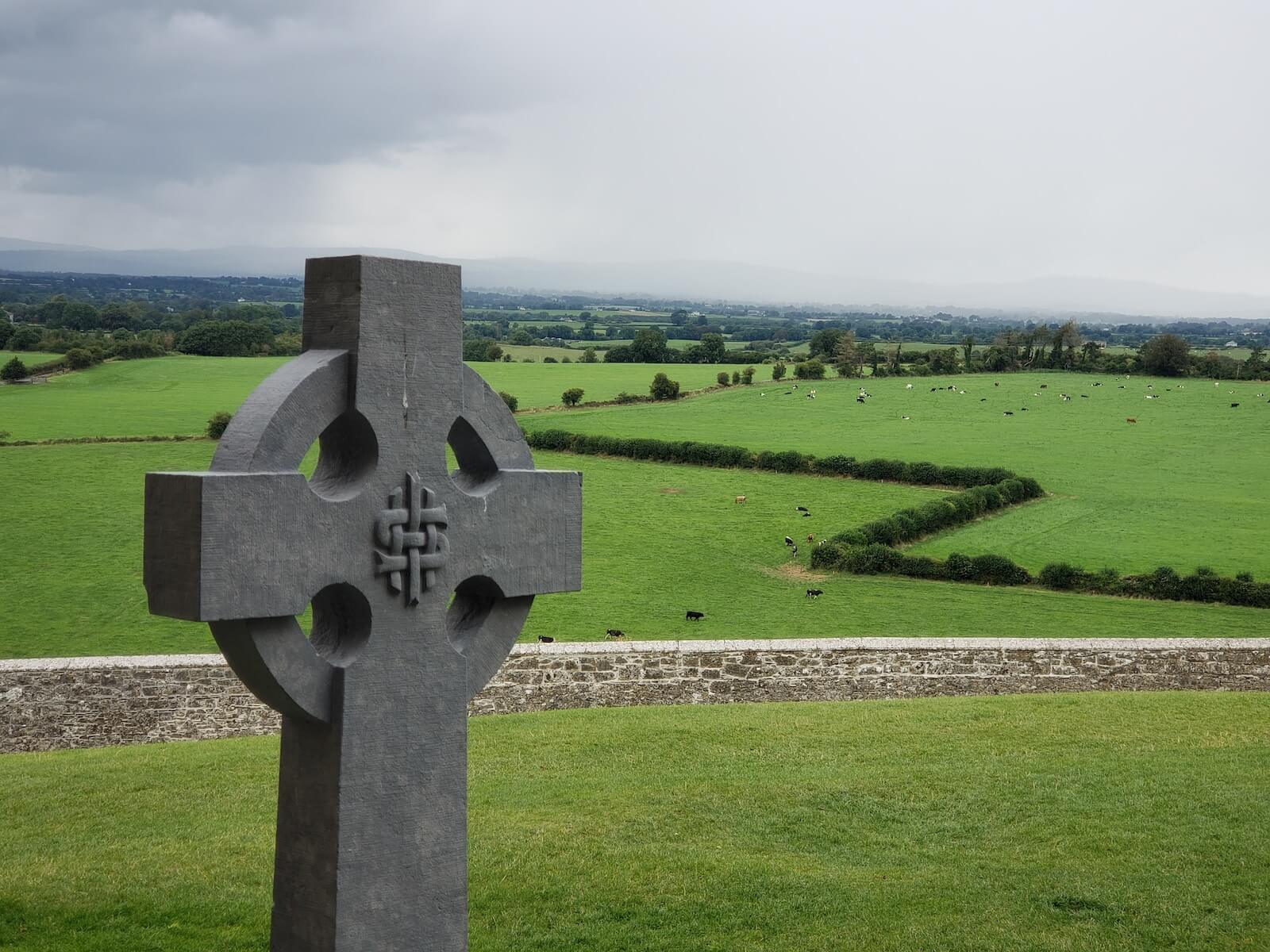
gray concrete cross on grass field during day

Duffie, a surname whose origins trace back to the rich tapestry of Scottish history, is often associated with heritage sites like Duffield in Derbyshire and MacDuff in Fife. But it’s the latter, MacDuff, that holds a closer connection. A peek at the Clan MacDuff’s family crest reveals the influence of the MacDuff spelling.

Unraveling the Origin

Theories abound regarding the Duffie name’s inception, with none reigning supreme yet. The common belief ties it to the ancient Celtic word “du,” translating to “black water,” possibly indicating a geographic feature like a river or the Moray Firth. The earliest record to bear the Duffie name is from 1201 AD, where Walter de Dufthe appears on a jurors’ list in Forres.

Underlying Language and Derivations

The Duffie surname features prominently in Scottish, Irish, and English Gaelic. Originating from “dubh,” a Gaelic word signifying black or dark, the name Duffie might be a phonetic adaptation of this ancient name. It first appeared in historical records from the 17th century, with the earliest known mention traced back to 1648 in Glenmore, Inverness-shire, Scotland.

The Duffie Legacy

First recorded in 1448 in Glenmore, the Duffie family faced tumultuous times during the 17th-century persecutions in Scotland. This forced many to seek refuge in Ireland and America. Notable family members include James Duffie, born in 1847 in Glasgow. He married Mary McArdle in 1868, and the couple had four children. James led a humble life as a laborer, moving his family from Glasgow to Warrington, England. Even after Mary’s death in 1906, James continued living in Warrington until his own passing in 1915.

David Duffie, another notable member, was born in 1848. His life, filled with personal highs and lows, began in Glasgow. After the death of his first wife, Mary, David found love again with Katherine McGibbon. His varied experiences lend an authentic, real-life edge to the Duffie lineage.

Irish and Scottish Connections: The Duffie-Duffy Conundrum

Tracing the Irish and Scottish connections to the Duffie name proves challenging. Traditionally, Duffie is considered an Anglicized form of the Gaelic Dubhthaigh, meaning “dark one” or “black one.” The earliest reference to Duffy dates back to 1598, strengthening the theory that Duffy evolved from Duffie.

In Scotland, the name remains elusive until the 18th century. Hypothesized origins include the Gaelic “dubh” or the Anglicized MacDuibh, alluding to darkness. The name appears first in Ulster in the early 17th century when David Duff suffered fatal consequences from a feud with the MacNamaras.

MacDuffie settlers introduced the name to Scotland and later carried it to the New World during the 18th century. Ulster MacDuffie settlers in America and MacDuffie immigrants to Canada expanded the Duffie legacy beyond the Scottish borders.

In Conclusion

The Duffie surname, deeply rooted in Scottish origins, weaves a complex narrative. Its presumed derivation from “dubh” and “aodha” hints at a fiery darkness, beautifully encapsulating the family’s tumultuous past. Thomas Newcomen, an English engineer and the inventor of the first atmospheric engine, stands out as the most renowned bearer of the Duffie name. With varied spellings like Douffie and Dougie, the legacy of Duffie remains a fascinating journey through time and place.

Sources: gaelic.net, nfld.net, onomastikon.org, scotlandspeople.gov.uk, ssp-scottishsurnames.org